

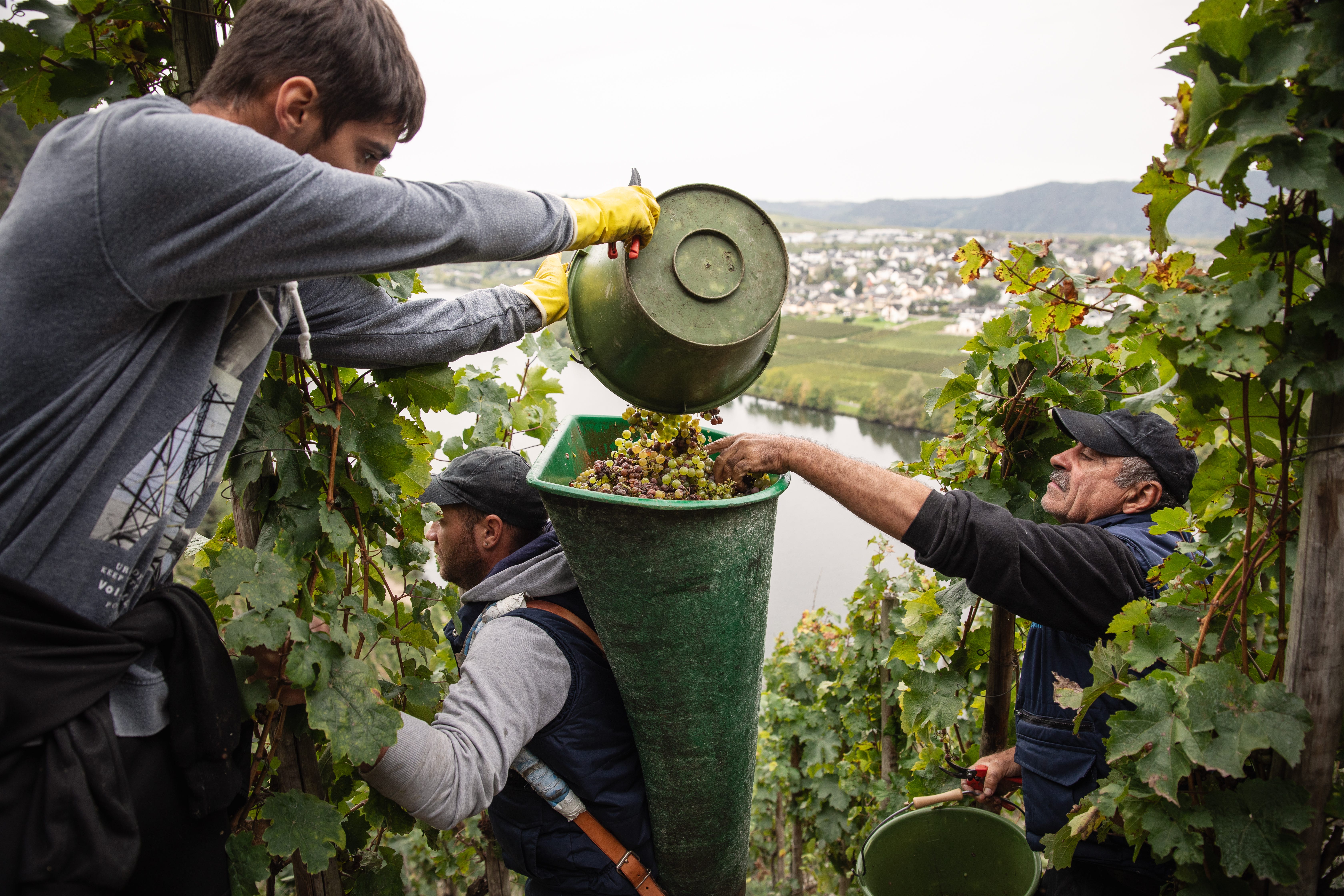
Germany’s 2026 vintage is already one for the history books. Across the country, the main harvest began extraordinarily early - for many producers, earlier than ever before. The German Wine Institute has reported that across all regions, the hot summer caused almost all varieties to ripen rapidly, and at roughly the same time. We don’t know if 2026 will produce exceptional wines, or whether this early harvest represents an anomaly or an acceleration of the longer-term trend. Nonetheless, the harvest itself is telling us something.
Historically, Germany is a cool-climate wine region where grapes grow at the northern limits of viticulture. In many regions, growers sought every possible advantage of steep slopes and favourable exposures. The country’s great vineyard sites weren’t chosen for their stunning views. For generations, one of German viticulture’s defining challenges was getting grapes ripe enough. Today, the challenge is preserving freshness once they get there, as growers adapt to warmer and drier conditions.
Grapes are routinely reaching harvest readiness considerably earlier than they once did. The calendar has moved, and not just for harvest. In the Mosel, where Riesling vines climb impossibly steep slopes and slate is in the ground and on the rooftops, Weingut Nik Weis reports that the entire growing season was significantly ahead, from early budbreak through to early ripening. Their Riesling harvest started September 5th - the earliest ever. Despite the extreme warmth and prolonged dry conditions, Marketing Director Alex Haben also reports exceptionally healthy, high-quality fruit.
Farther south, in considerably warmer Baden, Weingut Heitlinger began harvest on August 19th, 11 days ahead of its previous record. Winemaker Patrick Jacklin hopes that this new record won’t be broken any time soon, but at least he is satisfied with the quality of the grapes.
“Honestly, I wasn’t quite sure what to expect with such an early start, but in the end we harvested perfectly ripe, healthy and, most importantly, delicious grapes. We’re extremely happy with the quality.”
Over in the Pfalz - with its near-Mediterranean climate where almond trees grow next to vineyards - Weingut Geheimer Rat Dr. von Bassermann-Jordan began hand-harvesting Chardonnay for its ‘Pierre’ Sekt on August 12th - another 7–10 days earlier than recent vintages that themselves were considered early.
“It seems we’ll have to get used to being ready for harvest by mid-August,” says Operations Manager Achim Eberle.
The growing season had been ahead from the beginning, with early growth in April followed by an exceptionally hot and dry summer. Timely rain immediately before harvest refreshed the vines, and Eberle reports exceptionally healthy, aromatic fruit with fine, ripe acidity.
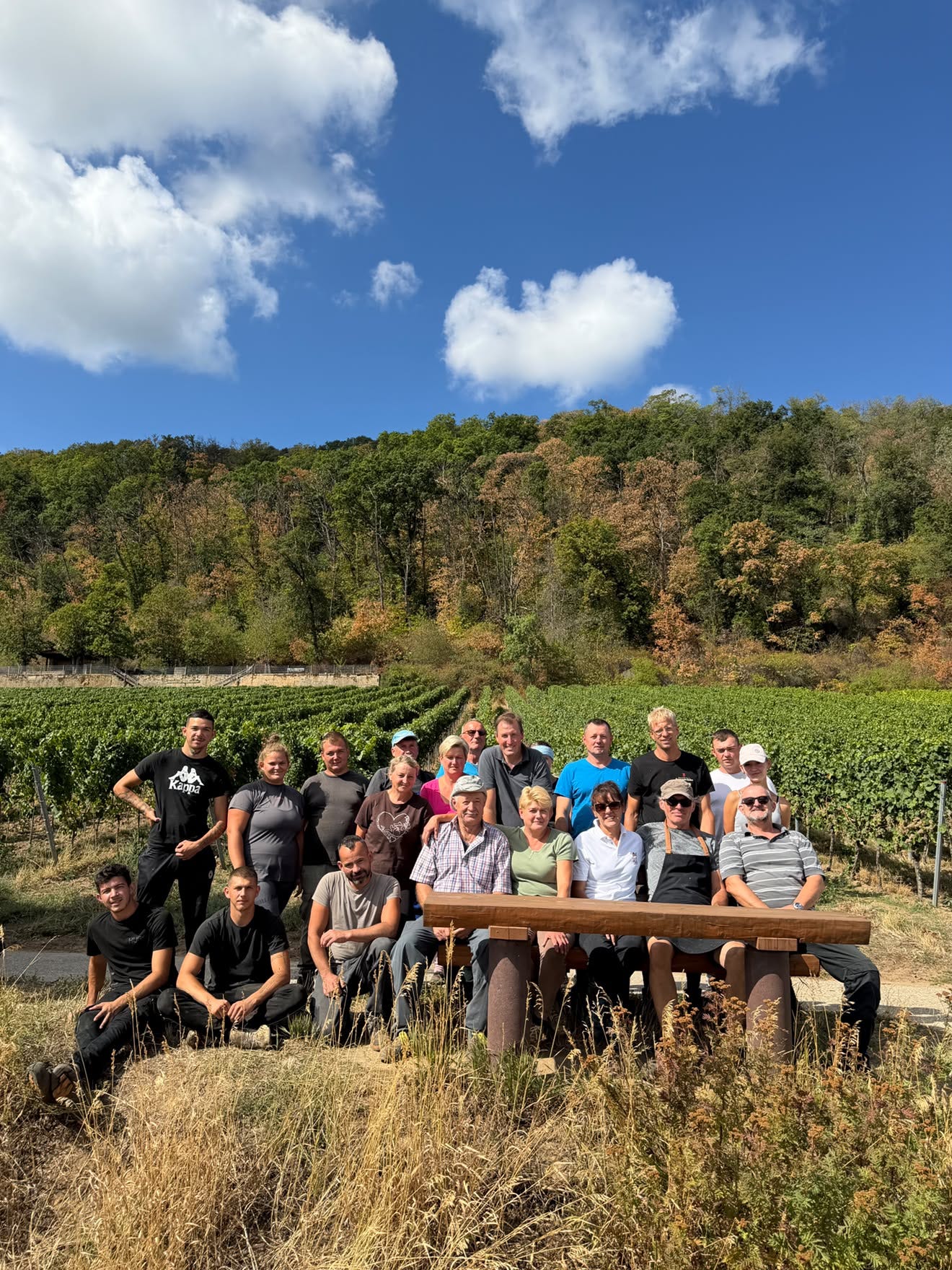
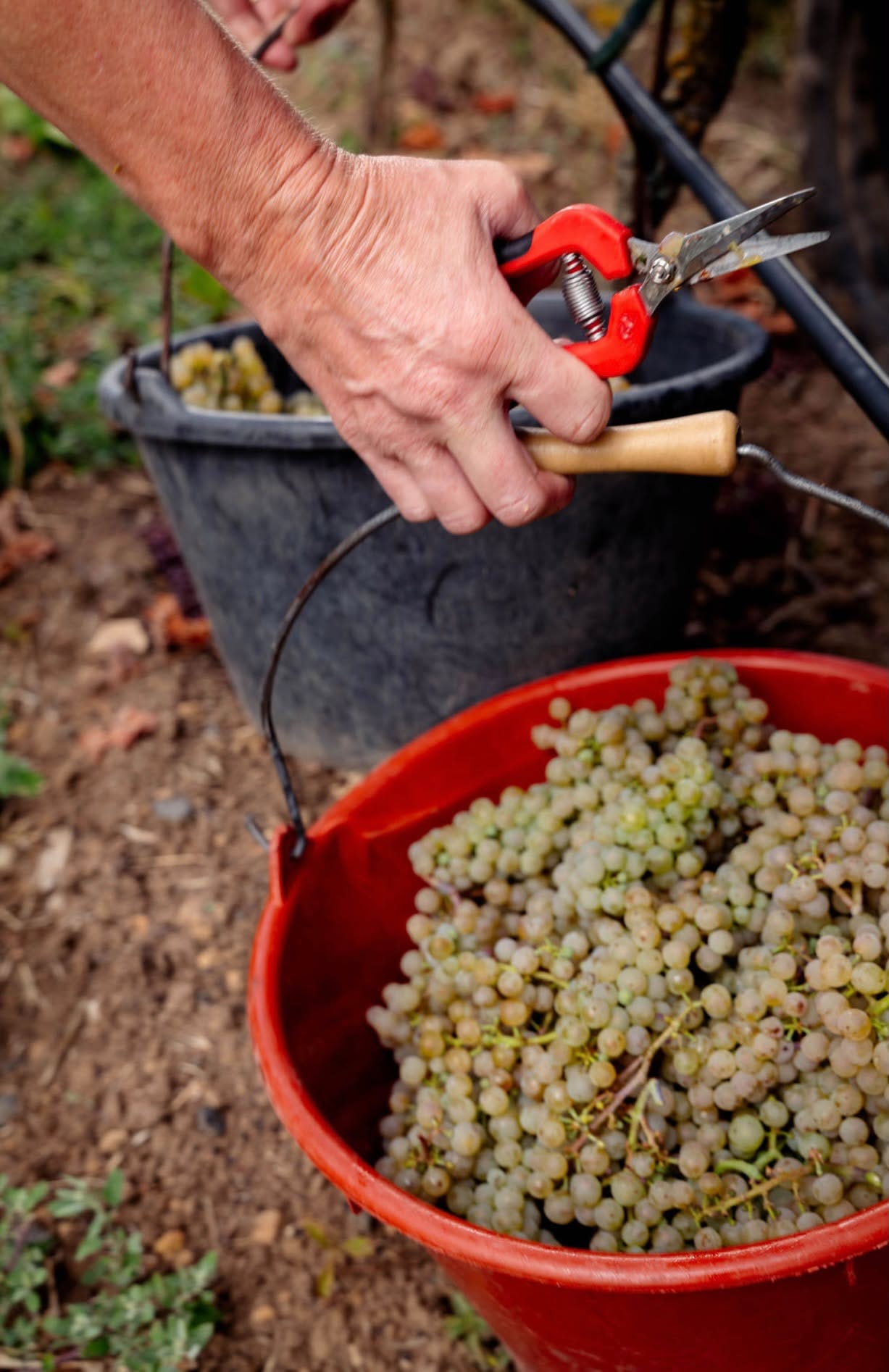
But more than just being early, the harvest time has also been compressed. With many varieties ripening simultaneously, the picking window has narrowed. In addition to monitoring sugar levels, the German Wine Institute has identified acidity as an increasingly important factor in picking decisions this year, particularly for preserving freshness in white wines. Jacklin points out:
“Sometimes you only have a few days to find that balance between ripeness and freshness.”
Conditions weren’t quite so restrictive in the Mosel. At Nik Weis, the team had more freedom to choose exactly when to pick. Haben notes how the local conditions worked in their favour:
“Fortunately, autumn has not been rainy so far, and fungal pressure was extremely low. This allowed us to select the harvest time very precisely and bring in healthy, ripe fruit.”
The compressed window also means harvest can be over almost as quickly as it begins. It’s almost as if the grapes don’t care what the calendar says. For some producers, harvest is already effectively over. At Bassermann-Jordan, the main harvest was effectively finished by September 10th, with only a small amount of fruit remaining for top-tier nobly sweet wines.
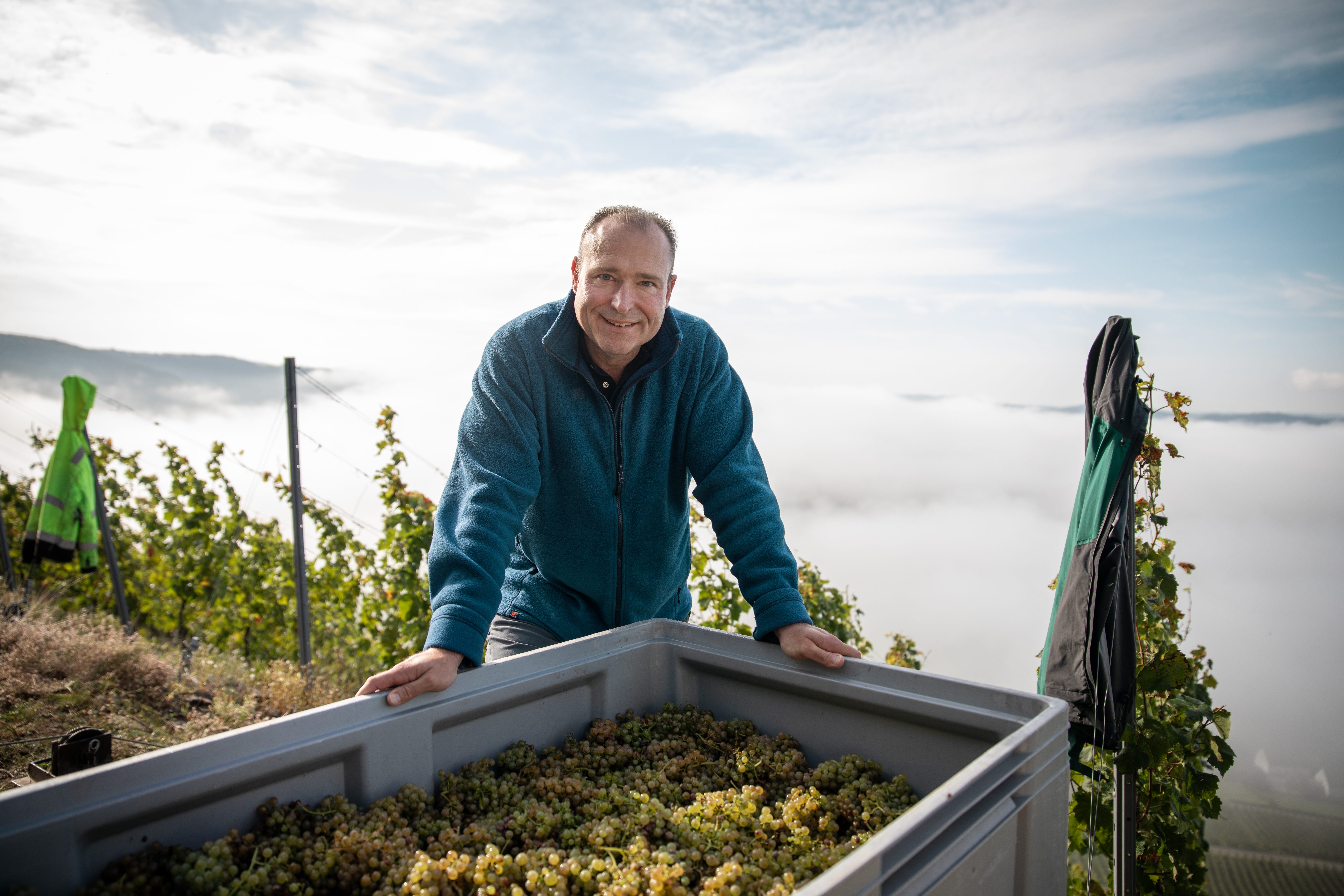
But earlier doesn’t necessarily mean harder in every respect. A cool, misty German autumn is considerably more romantic when you’re not trying to harvest grapes in it. Eberle offers an experienced perspective on this modern phenomenon:
“One clear advantage of the earlier harvest is that we now have considerably more stable weather. When I think back to my apprenticeship and my first years in the profession, harvest was often foggy, damp and cool, with frequent interruptions. Today, we can usually bring in the harvest within three to four weeks without any major interruptions.”
Accelerated and compressed ripening show how the vines are responding to warmer and drier conditions. Now vineyard management has to keep up. At both Heitlinger and Bassermann-Jordan, vineyard management places considerable emphasis on soil health and resilience. Jacklin believes Heitlinger’s approach plays an important role.
“We strongly feel that our biodynamically farmed vineyards are more resilient, especially in dry and hot years like this one. Healthy, living soils, biodiversity and resilient vines are therefore becoming increasingly important to us.”
Bassermann-Jordan’s approach is similar. They use diverse cover crops including legumes, brassicas, and grasses, alternating with fallow periods to regenerate the soil and ensure it is fit for the future.
Adapting to nature is inherent to winemaking - that’s a given. But in a changing climate, adaptation doesn’t stop at the winery door. Eberle explains what’s different in today’s world.
“Ideally, grapes are harvested at cool temperatures in order to preserve as much aroma as possible from the grapes into the must. For decades, October was traditionally the main harvest month. Now, harvest usually takes place in August or September, which inevitably means higher temperatures. To prevent higher must temperatures, hand harvesting is often limited to the morning hours, while grapes for entry-level wines may be machine-harvested at night or in the early morning. When necessary, we can use dry ice to cool the must further and prevent oxidation.”
Early harvest dates don’t just mean a scramble to pick. They affect the entire operation.
For centuries, German winegrowers worked in a climate where getting grapes fully ripe could itself be a challenge. The challenge facing today’s growers is increasingly a reversal of that reality. Ripeness can arrive quickly, picking decisions can come down to a matter of days, and the Weinlese - an activity firmly associated with autumn in German wine culture - can now begin in the heat of summer.
We can’t say yet what the 2026 wines will ultimately tell us about this vintage. But the harvest itself has already told us something about the direction of German wine. Adaptation is not just about preparing for what’s coming - it’s already happening, from the vineyard to the cellar.